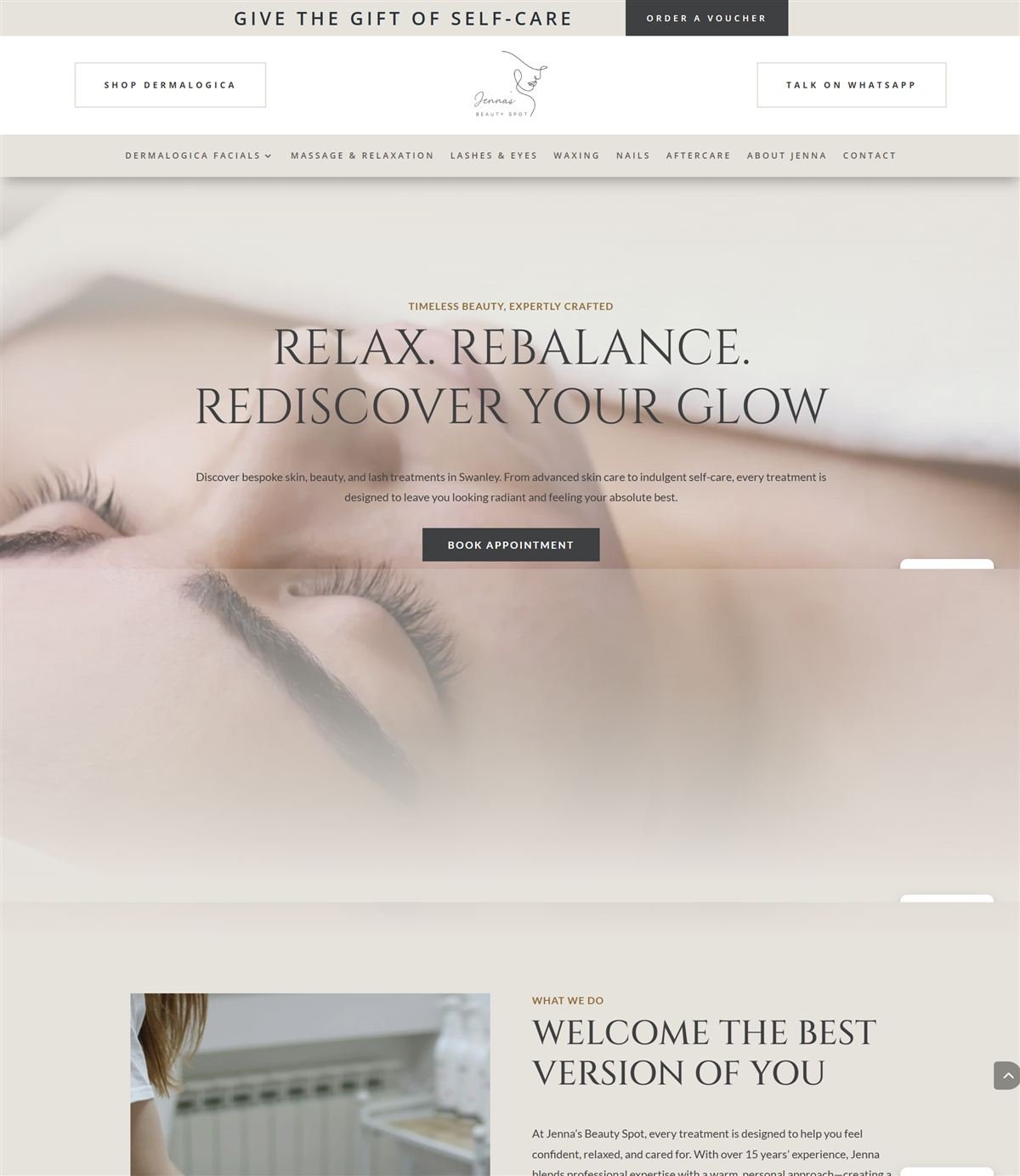
It hasn't kept up with the business
You've outgrown a DIY builder, or the site was built years ago and no longer reflects the quality of what you offer now.

Website design for small business owners
You don't need to speak the language of websites, and you don't need a finished specification. You need someone to work out, with you, what the site actually has to do — then design and build it properly.
No jargon. No arriving with a technical brief. Just a clear conversation about your business.
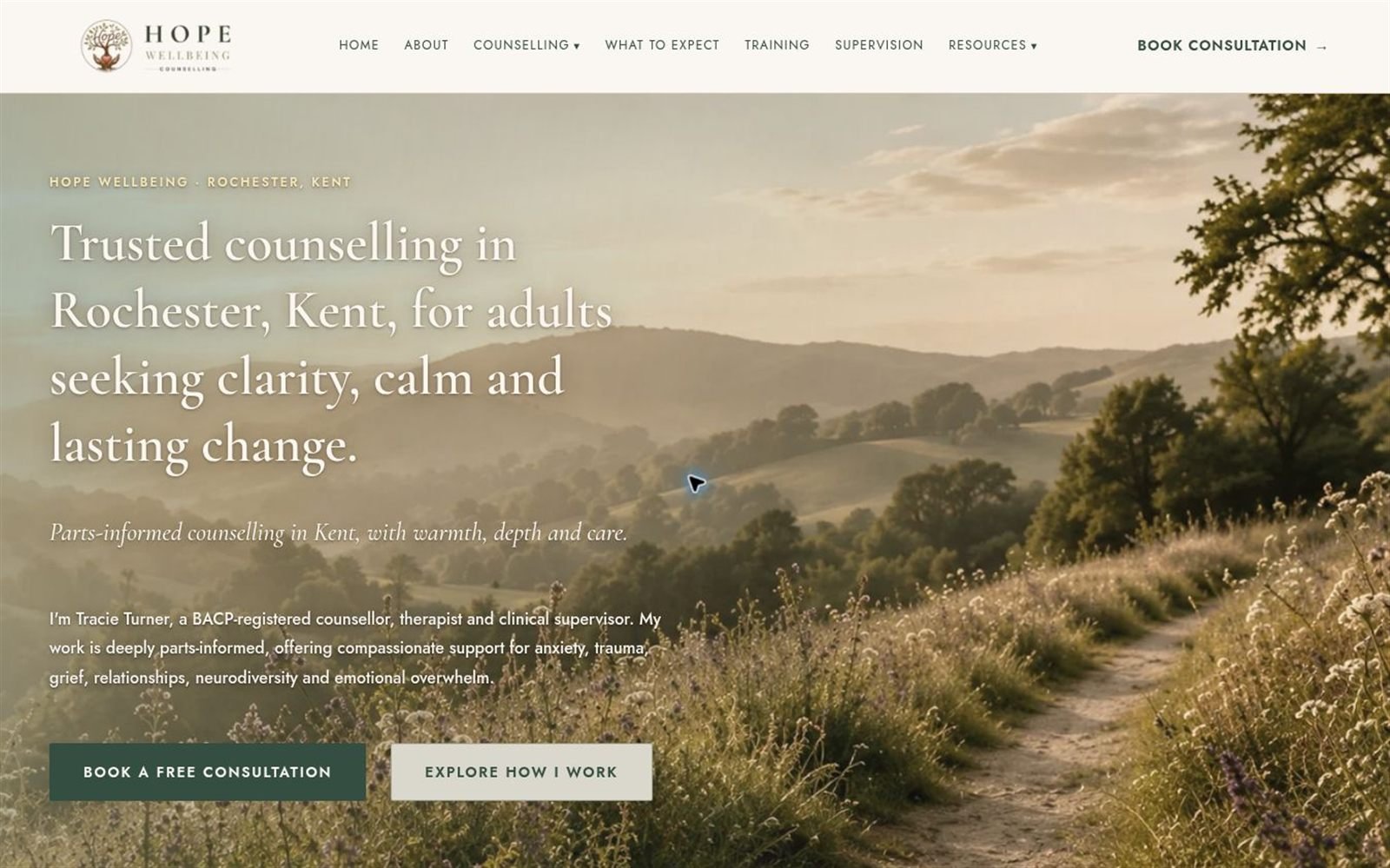
Website design · small businessHope WellbeingA calm, clear route through counselling, training and supervision.
Why Built by Clare
You describe the business and the problem. I translate that into structure, content and functionality.
The site includes what your customers actually need to do — not every feature a template offers by default.
Built so you can update the parts that change often, without needing to call anyone.
The business has grown. The website hasn't.
It might have started as a DIY builder site, or been built years ago by someone who's since moved on. Either way, it's common for a website to quietly fall behind the business it's meant to represent — customers can't easily understand what you offer, enquiries feel harder than they should, and updating anything means digging around in software you don't really understand.
None of that means starting from nothing. It means working out what the site needs to do now, for the business you actually run today.
Already have a website? Read about redesignCommon situations
Any one of these is a reasonable starting point for a conversation — you don't need all of them to apply.
You've outgrown a DIY builder, or the site was built years ago and no longer reflects the quality of what you offer now.
Unclear structure or content makes people work harder than they should to understand what you actually do.
Whether it's a contact form nobody fills in or bookings handled entirely by phone and email, the friction is costing you time and customers.
Simple changes require a developer, or software you never quite learned to use confidently.
The site exists, but it isn't structured in a way that helps search engines — or the right people — understand what you do.
A website should work as hard as you do.
Not a checklist — a starting point
A clear, simple way for people to get in touch.
Appointments or reservations handled without back-and-forth emails.
What you offer, explained clearly enough that people don't need to ask first.
Answers to the questions you're asked most, before people have to ask.
Genuine feedback, placed where it actually helps someone decide.
Photos of the work, the space or the product where that's what sells it.
Longer examples of the work for businesses where trust takes more building.
Clear, findable details for businesses that rely on local customers.
Connecting the tools you already use, rather than replacing them.
Taking deposits or full payments online, where that suits the business.
A simple way to collect enquiries you can follow up properly.
So you can see how the site is being found, and it's built to be found well — see what's included as standard.
Functionality only matters if it moves someone through these four steps without friction.
A resource, not a form
You don't need to arrive with a list of pages or features. Website Possibilities is a short, interactive way to see what a website could help your business do — explain, book, sell or connect — before you commit to anything.
Explore website possibilitiesSmall businesses, real functionality
Before you get in touch
If any of this feels uncertain, that's completely normal. The planner is designed to work through it with you.
Work through the questionsNo. Most small business owners don't arrive with one, and you don't need to. The planner and the first conversation are built to help establish what the website needs to do — I'll turn that into the technical detail.
That's normal, and it's exactly what Website Possibilities and the planner are for. We work through what your customers need to be able to do, then the pages and functionality follow from that.
Yes, where it's the right fit for the business. Booking systems, enquiry forms, payments and other integrations are covered as part of establishing what the site needs to do.
As involved as you want to be. Some clients want to be closely involved at every stage; others prefer to answer the planning questions clearly and let the project take shape from there.
You don't need a technical brief